.webp)
Short answer: measure a complete 40 cm grid, confirm the actual floor is compatible, then remove every trace of dust, grit, oil, wax residue, and water. Dry-lay the colors, alternate the backing arrows by 90 degrees for the standard checker direction, remove each protective film, and lower the tiles without trapping pile in the seams. Test the finished edges and traffic routes before moving furniture back.
What “without glue” means for TOLI Fabric Floor
No-glue carpet tiles are not all built the same way. TOLI describes Fabric Floor as having a suction-treated backing rather than a pressure-sensitive adhesive. The backing relies on close contact with a suitable smooth floor. That is why a tile can be lifted for rearrangement or hand washing, but also why dust, moisture, texture, and floor finish matter.
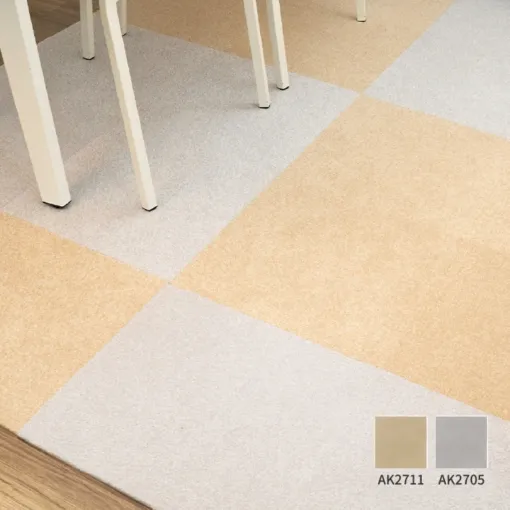
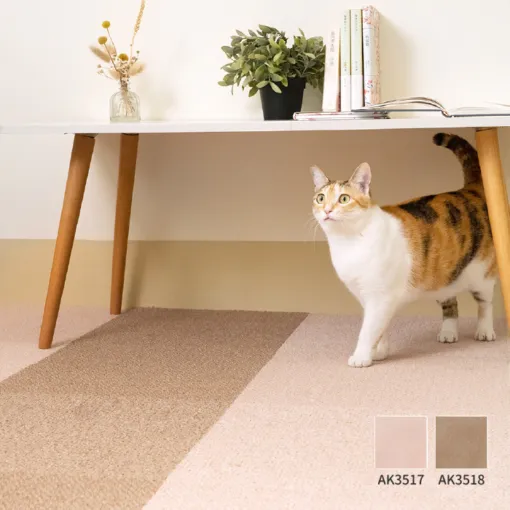
This guide applies to the AK35 Ripple Palette Neo and AK27 Canvas Fine residential tiles sold here. Each tile measures 40 x 40 cm, approximately 15.7 x 15.7 inches. It does not automatically apply to commercial loose-lay tiles, adhesive squares from another brand, or products that require seam tape.
Check the base floor before opening the tiles
TOLI's current Fabric Floor Q&A lists many wood floors, vinyl tile or sheet, cushion flooring, marble, and ceramic tile as compatible categories. There are important qualifications: some wood finishes do not grip well, wax may retain backing marks, and a vinyl-finished heated floor can discolor. Test a sample and read the base-floor manufacturer's instructions before treating any category as universal.
| Base floor | TOLI guidance | What to check |
|---|---|---|
| Wood flooring | Generally compatible; sample test advised | Finish, wax, grip, and marks after lifting |
| Vinyl tile or sheet | Compatible | Clean, smooth, dry surface; floor-heating caveat |
| Cushion flooring | Compatible | Flatness and surface condition |
| Marble or ceramic tile | Compatible | Flat joints and no loose grit |
| Existing carpet or tatami | Not compatible | Do not use for normal placement |
| Bare mortar or concrete | Not compatible | Do not use for normal no-glue placement |
Do not install on stairs. TOLI's current technical precautions say to avoid stair use. A raised edge, unsuitable surface, or tile that does not grip is a safety issue, not a styling detail.
What you need for a rug-sized installation
- A tape measure and the exact furniture clearances.
- Low-tack painter's tape to mark the outside rectangle.
- A vacuum or clean cloth for the hard floor.
- The planned AK35 or AK27 color count plus one or two spares.
- Optional TOLI edge trim if exposed height or edge damage is a concern.
A rug-sized rectangle normally needs no cutting. Full-room installation around walls, columns, vents, or door frames introduces cutting and edge decisions; follow the full TOLI manual or use a qualified flooring installer for that scope.
How to install the tiles step by step
- Plan a complete tile footprint.Measure the useful zone rather than the whole room. A 3 x 4 rug uses 12 tiles and measures 120 x 160 cm; a 4 x 5 rug uses 20 and measures 160 x 200 cm. Use the design tool to settle the color count first.
- Test the actual floor finish.Place a sample in an inconspicuous area, walk on it, leave it for several days, then lift it. Check grip and inspect the floor, especially when it is waxed, heated, newly finished, or part of a rental.
- Clean and dry the base floor.Remove dust, sand, oil, wax residue, water, and debris. If damp cleaning is needed, wait until the surface is fully dry. Grit under a tile reduces contact and can mark the floor.
- Dry-lay the colors and directions.Keep the protective films in place while checking the rectangle. TOLI's standard direction for AK35 and AK27 is checker installation: alternate the arrows on the back by 90 degrees, pointing up and right across the grid.
- Remove the film and lower each tile.Start at a square reference corner. Place the tile slowly, butt the next edge closely, and keep pile fibers out of the joint. Do not stretch, force, or overlap the tiles.
- Check edges, doors, and movement.Walk across the rug, inspect every exposed edge, open nearby doors, and test the intended chair path. Lift and reposition any square that is out of line before returning heavy furniture.
Testing a chair path checks the rug edge and placement; it does not prove durability under repeated loaded casters. AK35 and AK27 are residential products without an official caster-use claim. Use the home-office carpet tile guide to separate a feet-only rug from a daily rolling-chair surface.
Why the tiles stay put without adhesive
The backing does not need to form a permanent bond; it needs broad, clean contact with the base floor. TOLI says the suction treatment resists ordinary horizontal shifting on the intended surface. Adjacent squares also create a larger stable footprint than one isolated tile.
That does not make placement conditions optional. If a tile moves, first look for dust on the floor or backing, moisture, an unsuitable texture, a curled edge, or a base finish that did not pass the sample test. TOLI says dust on the backing can be wiped away with a damp cloth so the tile can be reused. Let the backing and floor dry before placing it again.
Common installation mistakes
- Skipping the sample test: “wood floor” describes a category, not one identical finish.
- Placing over carpet or tatami: the backing cannot make the intended smooth contact.
- Installing over grit or moisture: both weaken contact and may affect the floor.
- Ignoring backing arrows: inconsistent pile direction can make identical colors look mismatched.
- Trapping pile in a seam: this opens the joint and makes the grid look uneven.
- Putting a raised edge in a doorway: move the footprint or consider the correct edge trim.
- Assuming floor heating is automatically fine: check both TOLI's caveats and the heating manufacturer's restrictions on rugs.
Can you lift and move the rug later?
Individual Fabric Floor tiles are designed to be removable and repositionable. Photograph the layout first, keep the product and color codes, lift one square at a time, and store pieces flat and dry. Before reinstalling elsewhere, repeat the base-floor check; compatibility in one apartment does not prove compatibility with another finish.
For rental housing, obtain any permission your lease requires and document the floor before the sample test. The renter carpet tile guide covers that decision. If you are comparing this system with adhesive squares, read the peel-and-stick carpet tile alternative. When the layout is settled, use the free carpet tile designer to calculate exact AK35 or AK27 colors and spares.